Tokyo!

  N902i image
I just got back from a week in Tokyo, paradise for mobile geeks. 3G seems to be taking Japan by storm. In wandering around the city, I saw many of the latest 3G handsets in use. One of the most popular seemed to be NEC's Linux based N902i on the DoCoMo FOMA network. The selling point of this phone is the 2MP camera with image stabilization and auto focus, but the nicest part for me was the Netfront browser on the 2.5 inch, 240 x 345 (dubbed QVGA+TM) TFT screen with 262,144 colors. The N902i also has an MP3 player with equalizer, a PDF viewer, support for the Japanese i-Appli Java standard for games and applications and it does OTA MP3 downloads and uses a mini-SD for storage. You can read an English brochure or down load the English edition of the phone's manual here. The phone's UI can be toggled between Japanese and English and it can roam on European UTMS and GSM networks as well as North American 1900 mHz networks (see comments). The N902i sells for around $150 with a new two year contract and about twice that for a user who upgrades an existing NTT plan to 3G with a one year contract extension. At 106mm X 51mm X 25mm and 127 grams, the N902i is large by US standards (the RAZR for example, is 98 x 53 x 14 mm and 97 grams) but fairly typical for Japanese phones which generally feature large screens - several models have 2.8 or 2.9 inch LCD's.   D902i image
In fact the N902i has a stablemate, the Symbian based Mitsubishi D902i - a slider with a 2.8" screen which I also saw several people using in Tokyo. Both of these phones are considered feature phones rather than smartphones by the operators. Many Japanese feature phones run either Linux or a version of Symbian with a Japanese developed UI called MOAP ("Mobile Oriented Applications Platform"). Disappointingly, it appears that neither of these phones supports installing native Linux or Symbian applications. On the plus side, i-Appli, the Japanese Java subset, does seem to have more access to the phone's hardware than Java ME.

Japanese 3G uses two different technologies. The number one and number three carriers NTT and Vodaphone use UMTS at the worldwide (except for North America) standard frequency of 2100 mHz. Japanese UMTS phones are world-phones and can operate on UTMS networks in Europe and Asia. Most also support GSM at 900, 1800 and 1900 mHz. GSM is not used in Japan and is provided on these phones to enhance their international roaming capabilities. The older 2G Japanese systems used unique technologies and frequencies and were not comparable with any other networks in the world. The number two Japanese network AU by KDDI uses EV-DO which has a significant speed advantage over UMTS. That speed advantage seems to be paying off for AU which now has almost as many 3G subscribers - 21.8 million as DoCoMo which has 23.5 million. Vodaphone, which recently sold their Japanese operation to Softbank trails badly with only 3 million 3G users. Unlike DoCoMo and Vodaphone's 3G handsets, AU's use unique Japanese frequencies and won't work anywhere else in the world.

If you're thinking it would be neat to import one of these Japanese UTMS/GSM phones for use in your country, think again. In Japan phones are not normally sold without a contract and in addition all the phones are SIM-locked and only a few models have been successfully unlocked.

The cost of mobile service including data is coming down in Japan although it's still on the high side. A basic 3G plan runs about 4050 Yen ($34) including tax. You only get between 24 between 60 voice minutes per month (depending on carrier and time of day) with the 4050 Yen plan. Extra voice minutes are about $0.26 each.
The good news is that you can add an unlimited data option for an additional 4050 Yen per month. That's only for data consumed on the phone, tethering is extra.

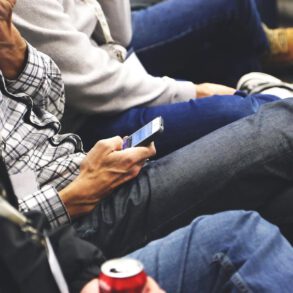
It is a common observation that the Japanese use their phones constantly but rarely speak on them. I can certainly vouch for that. On the subway, where signs warn that phones must be silent - about half the riders at every given time were tapping away on their phones. Surreptitiously looking over the shoulders of my fellow riders, I did an un-scientific survey of what they were using their phones for. About 50% seemed to be browsing the mobile web, about 25% were reading and responding to e-mail and the remaining 25% playing games.

  mobile Suica logo
There was heavy promotion on the trains and TV for mobile Suica the just launched contactless e-wallet system that lets you use your mobile as a RFID based stored value payment card. Special gates with the


Pages: 1 2
posted by Dennis Bournique
April 19, 2006 @ 7:47 pm
7 View Comments

0 Home | # Archives | Contact | Download | Privacy
« 8 CyclingLive Fixed Now - I hope.
» 9 Carnival 23
Google
Powered by WordPress.
WordPress Mobile Edition available at alexking.org.
Full Site